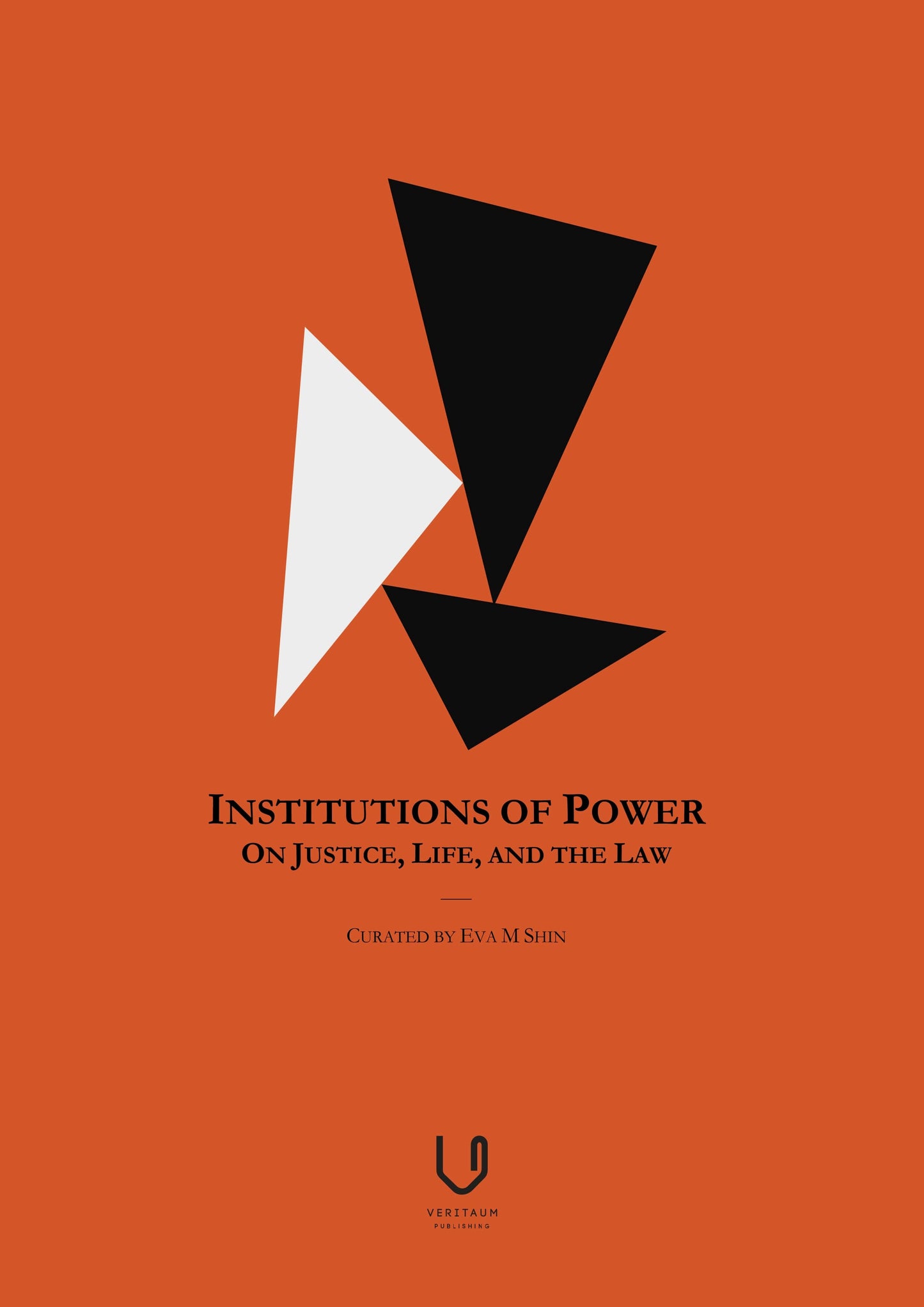
Institutions of Power: On Justice, Life, and the Law
Couldn't load pickup availability
Copyright Notice
Copyright Notice
Single-volume purchases are licensed for personal use only. They do not permit library or classroom circulation, reproduction, or digital distribution. Schools and libraries should purchase the Collected Volumes for institutional access.
Digital Product Policy
All sales of digital products are final. Upon order confirmation, you’ll receive an email with your download link. Due to the nature of digital goods, refunds or exchanges cannot be issued, so please confirm device compatibility before completing your order.
Publication Details
Publication Details
ISBN: 979-11-995395-4-9
Release date: January 9, 2026
Format: eBook (PDF)
Page count: 127
Content curator: Eva M Shin
Publisher (imprint): Veritaum
Sold by: Veritaum LLC
Copyright © 2026 Veritaum LLC. All rights reserved.
This collection of essays offers a critical examination of the institutions that exert control over the lives and bodies of citizens. It investigates the complex interplay between law, medicine, and morality within the system of governance. The essays explore how state power is wielded in its most intimate and final forms—from the regulation of reproductive health and the failures of the carceral system to the administration of the death penalty. By analyzing these mechanisms of control, this volume questions the very nature of justice and care in the modern world.
Share

What’s Inside
-
The Decline of Ecclesiastical Authority in the Italian Healthcare System
Trace the centuries-long rivalry between secular and religious power in Italy through the lens of a single, vital institution: the hospital. This essay examines how the Italian healthcare system, once the backbone of Church-run charity, was gradually transformed by the rise of the modern state. It details the fractious institutional development and legal shifts that saw the principles of public welfare and secularism displace a system originally founded on faith.
-
Architects of the Right to Life: The Catholic Church’s Enduring Influence on Abortion Policy
Look beyond the pews to see the Catholic Church as a formidable political organizer. This essay details the crucial role the Church played in creating and sustaining the right-to-life movement following Roe v. Wade. It reveals how the Church provided the organizational infrastructure, ideology, and resources to build a powerful coalition that successfully worked to overturn established abortion rights, showcasing the enduring influence of religious institutions on public policy.
-
Reform or Repeat? Mental Illness and Carceral Practices During the Moral Treatment Era
Drawing on the theories of Michel Foucault, this paper analyzes the failure of the 19th-century “Moral Treatment” movement in American asylums. It argues that institutions designed for humane care ultimately mirrored prisons due to systemic neglect and the dehumanizing treatment of marginalized groups. This historical analysis offers profound insights into the modern criminalization of mental illness and the pitfalls of institutional reform.
-
Mental Health Treatment and Recidivism: An Examination of Effectiveness
Does providing mental health treatment in prison actually reduce reoffending? Based on a statistical analysis of over 500 formerly incarcerated individuals, this study reveals a surprising answer: by itself, it doesn’t. This paper dissects the data to argue that factors like drug history and prior convictions are far stronger predictors, suggesting that only comprehensive strategies involving education, employment, and social services can truly address high recidivism rates.
-
Lethal Injections Gone Awry: Unmasking America’s Capital Punishment System
Go behind the curtain of the modern American execution chamber. This paper traces the evolution and ongoing controversy surrounding lethal injection, the nation’s primary method of capital punishment. It moves beyond legal debate to reveal the multitude of factors—from drug shortages and experimental methods to underlying political motivations—that plague the effective and ethical enforcement of the death penalty today.
-